
The cost of energy affects businesses and homeowners across the board. From how we power our operations to how we heat our homes, the fluctuating prices have got us keeping an eye on our bottom line. Recent headlines have once again placed energy prices at the centre of the national conversation. Earlier this year, the UK government announced that energy bills would fall by around £117 from April, offering some much-needed relief for households and businesses after years of volatility. However, with tensions in Iran and the wider Middle East affecting global energy markets, suppliers have warned that prices could climb again later this year.
For many, this situation highlights a frustrating reality. With rapidly changing events happening thousands of miles away, those at home are facing the repercussions. The positive news is that there are ways to protect yourself from these fluctuations. One investment is solar panels, which provide a much greater level of energy independence.
Why Global Politics Can Move Your Energy Bill
Energy markets are heavily influenced by global events. Even when the UK produces some of its own energy, we are still connected to international supply chains and fuel markets. When geopolitical tensions rise, particularly in regions that play a major role in worldwide energy supply, prices can increase quickly. This is why the news reporting the situation in the Middle East is receiving much attention in relation to our energy bills. But how does this affect us?
1. Supply disruptions, or the fear of them
Markets react to the possibility of shortages. So if tensions threaten major oil or gas regions or important shipping routes, such as those in the Middle East, prices increase to account for any potential disruption.
As gas still plays a large role in the generation of electricity, higher prices often translate into higher electricity prices.
2. Shipping and insurance costs can increase
Despite conflicts or political instability being away from the UK, they still have an influence on how our properties are powered, as ships may need to reroute or face higher insurance costs, which are then passed onto the consumer.
What the Energy Price Cap Means for Households
Thankfully, in the UK, the energy market has a safeguard known as the Ofgem energy price cap. This limits how much suppliers can charge customers on standard variable tariffs. Whilst we’re aware that from 1st April 2026, the average household energy bill is capped at £1,641 per year, the cap changes every three months depending on wholesale energy prices.
That means:
- If you’re on a fixed tariff, your unit rates remain stable until the contract ends.
- If you’re on a standard variable tariff, your rates move with the price cap.
Wholesale prices may remain high due to global tensions, with analysts warning that the cap could rise again. Some experts believe it could climb to £2,500 per year, as seen during the 2022 energy crisis.
What Solar Panels Change
With the cost-of-living crisis, this uncertainty makes it challenging for people to budget accordingly. That’s why many are looking to solar panels as their dedicated source of electricity. By generating a portion of your own power directly from sunlight, every kilowatt-hour you use at home is electricity that you don’t have to buy at grid prices.
This matters to the average household because grid electricity prices are the part of your bill most exposed to global fuel price swings, wholesale market volatility, and seasonal demand spikes. By generating your own power, you reduce your reliance on these unpredictable factors. In other words, solar panels provide a degree of energy independence that traditional energy supplies simply cannot offer.
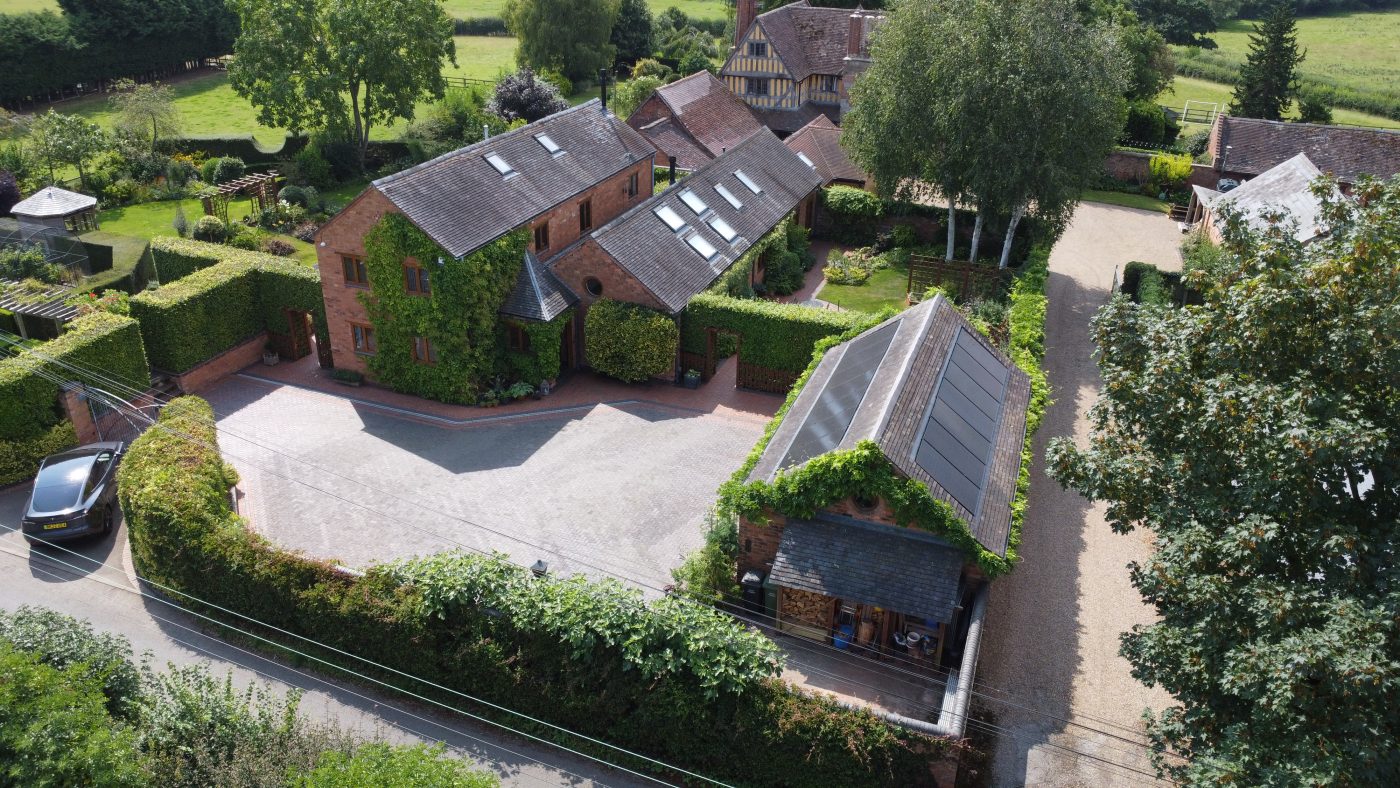
Solar Panels with Battery Storage
Understandably, many households use the most electricity in the evening and benefit from battery storage with electricity generated during daylight hours.
A solar battery can be especially beneficial if:
- You’re out during the day and would otherwise export most of your solar generation
- Your household energy use is highest in the evening
- You are on a time-of-use tariff and want to avoid peak electricity prices
This ability to store and use more of the electricity you generate increases the percentage of your home powered by solar energy.
How Much Can Solar Panels Save?
It’s no secret that solar panels can significantly reduce electricity costs for UK households. Using Ofgem’s April–June 2026 price cap levels, a typical UK home spends roughly £875 per year on electricity. A well-sized installation provided by Solar Select could deliver annual savings between £400-£650, depending on the size of your roof, orientation and shading. That equates to reducing the electricity portion of your bill by roughly 46% to 74%.
Why 2026 Could Be the Right Time to Go Solar
Energy prices have proven to be unpredictable over the past several years. Although government support and price caps are there to provide short-term protection, unexpected global events are still influencing the cost of electricity. Solar panels provide a long-term, sustainable solution that reduces your reliance on energy markets.
Take Control of Your Energy Costs
Solar Select are specialists in helping homeowners and businesses install high-quality solar panels and battery systems designed to maximise energy savings. If you’re considering solar power, our team can assess your property and provide clear advice on the best system for your needs so that you can gain more control over your energy costs.
If you’d like to explore your options or get a tailored quote, our team is here to help.
Follow us on social media >>>



Ready to take control of your energy future with solar power?